

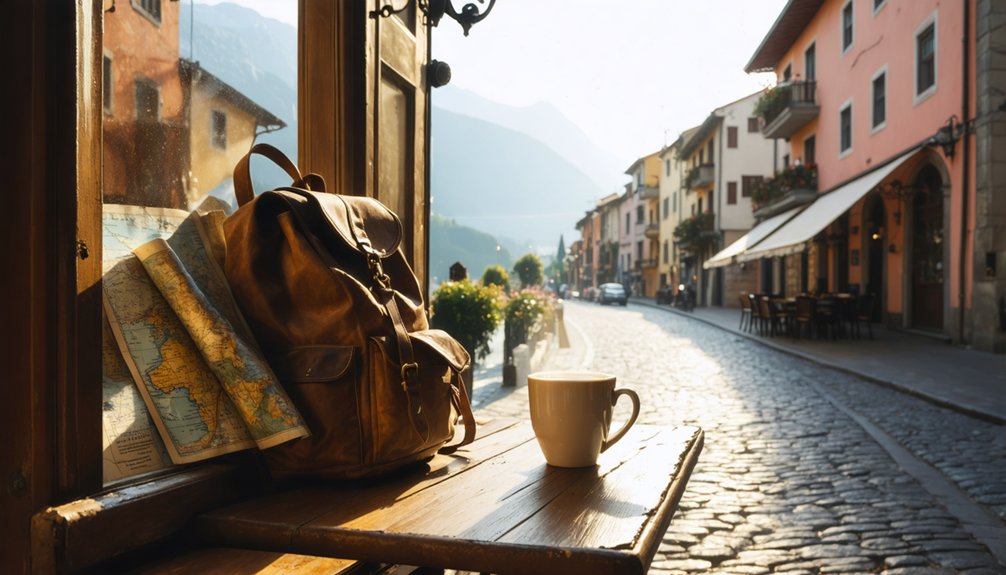
Solo travelers should prioritize safety, documentation, and local research. Secure thorough travel insurance, copy important documents, and notify banks. Research regional risks, cultural norms, and healthcare access. Pre-book verified accommodation and transport, use luggage trackers, and carry multiple payment methods. Practice situational awareness: avoid headphones, plan routes, and share live locations. Use layered anti-theft gear, portable power, and a compact first-aid kit. Follow these basics for confidence and preparedness, with practical next steps available below.
Key Takeaways
- Buy comprehensive travel insurance, carry digital/physical copies, and notify your bank of travel dates.
- Research local safety, laws, cultural norms, and register with your embassy before departure.
- Pre-book first-night accommodation and airport transport; choose verified listings with flexible cancellation.
- Use layered anti-theft measures: front-position bag, hidden money belt, spare cards, and luggage locks.
- Share your itinerary and regular check-ins with a trusted contact; carry offline maps and a local SIM or eSIM.
Pre-Trip Planning and Safety Enrollment
Before departure, the solo traveler prioritizes pre-trip planning and safety enrollment by securing thorough travel insurance, confirming medical coverage and vaccinations, obtaining required visas and permits, organizing financial and banking arrangements, and establishing emergency communication and check-in systems.
The traveler completes insurance enrollment that covers medical emergencies, trip cancellations, and personal belongings.
Vaccination records are updated and consultations arranged with healthcare professionals.
Documents — passport, visas, reservations — are copied and stored securely, with a backup wallet carrying spare cards and local currency.
Banks are notified to prevent freezes; multiple payment methods and international transaction capabilities are set.
An itinerary and emergency contacts list are shared with trusted persons, with a regular check-in schedule.
Connectivity options and offline maps are prepared for reassurance and complimentary. It also helps to choose a destination that fits your travel style and comfort level, especially when selecting between backpacking, organized tours, or mid-range adventure trips. Additionally, consider traveling in the shoulder season to benefit from lower crowds and often better value. Solo travel offers personal growth through confronting fears, trying new experiences, and discovering new aspects of character and independence.
Researching Local Risks and Cultural Norms
How should a solo traveler systematically assess local risks and cultural norms to reduce exposure and respect local practices? A methodical checklist: consult safety tiering and regional risk variability data, note country- and city-specific crime rates (e.g., higher violent crime in Venezuela, Brazil, South Africa), and identify gender-specific threats such as harassment hotspots and access to reproductive care.
Map conservative norms, dress codes, alcohol and photography restrictions, and hierarchical etiquette. Verify local laws and emergency services, prioritize tourist-area security levels, and prepare contingency plans for rural versus urban healthcare access.
Learn basic language etiquette and non-verbal cues to foster belonging and minimize offense. Share findings with contacts, register with embassies, and update plans as advisories change. It’s also useful to check recent traveller reports and official sources for safety updates. Solo travel interest has more than doubled since before 2021, reflecting a rapid growth in demand and industry focus, and the global solo travel market was valued at USD 482.5 billion.
Securing Accommodation and Transport in Advance
For solo travelers aiming to minimize uncertainty and costs, securing accommodation and transport in advance leverages online booking platforms, price-comparison tools, and pre-booked tours to optimize safety, budgeting, and itinerary efficiency.
Solo travelers use marketplaces like Airbnb, Booking.com, and Expedia for efficient comparison: price, reviews, and availability in one view. Early booking captures single-room inventory and no-single-supplement offers; organized tours and roommate-pairing options reduce costs and increase community. Mobile-first planning supports last-minute checks while keeping reservations firm.
Financially, travelers match budgets ($1,000–$3,000 typical) to pre-booked logistics. Prioritize listings with flexible cancellations, verified reviews, and transparent fees. Pre-arranged transport and managed tour packages further lower stress, support autonomy, and foster belonging among fellow solo travelers. Additionally, solo travel interest surged significantly in recent years, with searches rising sharply during the pandemic, reflecting growing demand, especially among younger travelers 761.15% rise. Hosts and platforms that highlight inclusive options tend to attract more solo guests. Booking ahead also taps into single-room availability and early-bird pricing.
Situational Awareness and Street-Smart Habits
Drawing on preparation and observation, solo travelers prioritize situational awareness and street-smart habits to reduce risk and enhance confidence: download offline maps, research local crime patterns and norms, scan surroundings instead of fixating on devices, avoid headphones, and memorize key landmarks and street names. Solo travelers maintain peripheral vision, scanning for changes in crowd flow and spotting unusual body language or micro expressions that signal potential threats. They rehearse “What If?” scenarios, identify escape routes and well-lit safe zones, and blend with locals through modest dress and practiced walking pace. Social checks—brief chats with staff, sharing live locations, using reputable transport—create informal community monitoring. Confidence, sobriety, and decisive route changes reinforce belonging and lower vulnerability. Always plan routes and transportation ahead of time to reduce uncertainty and increase preparedness plan routes beforehand.
Protecting Your Belongings and Documents
Situational awareness naturally extends to protecting belongings and documents; solo travelers apply the same observational habits to secure valuables. Use layered defenses: hotel safes for passports, RFID-blocking travel wallets, neck pouches and slim under-clothing wallets to reduce targeting.
Adopt anti-theft luggage: cut-resistant backpacks, lockable zippers, integrated RFID compartments and small padlocks. Practice strategic document management: store digital copies in cloud services with document encryption, separate primary and backup IDs, conceal cash across locations, and limit visible valuables during transactions.
Maintain transit precautions: front-position crossbody bags, wearable storage on long flights, and portable power banks for constant communication. Complement hardware with travel insurance for loss or theft. Routine checks of room locks and discreet luggage placement reinforce personal security and group-minded confidence.
Blending In and Cultural Adaptation
When traveling solo, blending in and adapting to local culture reduces attention and enhances authentic interaction.
Pre-trip cultural research informs dress, photography etiquette, and expectations around power distance and collectivism versus individualism.
Learning greetings and basic phrases signals respect; practicing pronunciation supports entry into conversational norms.
Dressing modestly or buying local clothing eases integration; choose understated outfits over tourist labels.
Observe nonverbal cues and public behavior—eye contact, personal space, queuing—and mirror them to fit community rhythm.
Seek immersion via homestays, cooking classes focused on local cuisine, and visits to street markets to experience daily life and build rapport.
These focused adaptations create belonging, foster safer interactions, and open opportunities for genuine connection.
Essential Safety Gear and Tech to Pack
Covering medical, security, connectivity, financial, and document protection needs, the essential safety gear and tech list prioritizes items that enable self-care, communication, theft prevention, and rapid recovery from emergencies.
Solo travelers should carry a compact first aid kit (IFAK) with bandages, antiseptic, pain relievers, tourniquet, trauma pads, triangle bandage, SAM splint and extra wrap.
Travel tech essentials include eSIM or local SIM, universal adapter, portable battery pack, charger and spare USB cord.
Security items: anti-theft bag, RFID passport cover, padlock, money belt, door stop and personal alarm.
Financial and document protections: low-fee travel card, spare credit card, hidden emergency cash, fake wallet, portable safe, photocopies, spare photos, travel insurance (digital + physical) and luggage trackers.
Mental Health and Solo Travel Wellbeing
Beyond gear and tech, solo travel’s impact on mental health and wellbeing is a primary consideration for many travelers. Solo trips deliver measurable mental health benefits: reduced stress, improved emotional stability, and recovery support evidenced by psychological studies. Motivations often include self-care, personal growth, and liberty to schedule time for mindful wandering.
Solo travel challenges anxiety through independent problem-solving, building confidence and emotional resilience via daily decisions and positive risk-taking. Environmental change offers present-moment focus, creativity, and relief from overstimulation. Considerations include readiness for travel, timing, and support systems to maximize gains and reduce risk.
For those seeking belonging, structured solo plans, local contacts, and paced solitude optimize wellbeing while fostering connection and sustainable mental health improvements.
References
- https://under30experiences.com/blog/84-travel-safety-tips-solo-travelers
- https://www.sunsetsabroad.com/solo-travel-tips-safety/
- https://solotravelerworld.com/travel-safety/
- https://roamfreerebecca.com/solo-travel-safety-items/
- https://www.smartraveller.gov.au/news-and-updates/safety-tips-solo-travellers
- https://solotravelerworld.com/solo-travel-safety/
- https://www.youtube.com/watch?v=Nxnn3RCrnbo
- https://assets.ctfassets.net/n2ifzifcqscw/22rq8mNbXlp0ZowtlrQtfu/d74b0ef3e9bdad12ddc5bfb1958c86be/pacaso-solo-travel-checklist.pdf
- https://www.seeingsam.com/planning-first-solo-travel-trip/
- https://solotravelerworld.com/travel-trip-planning/